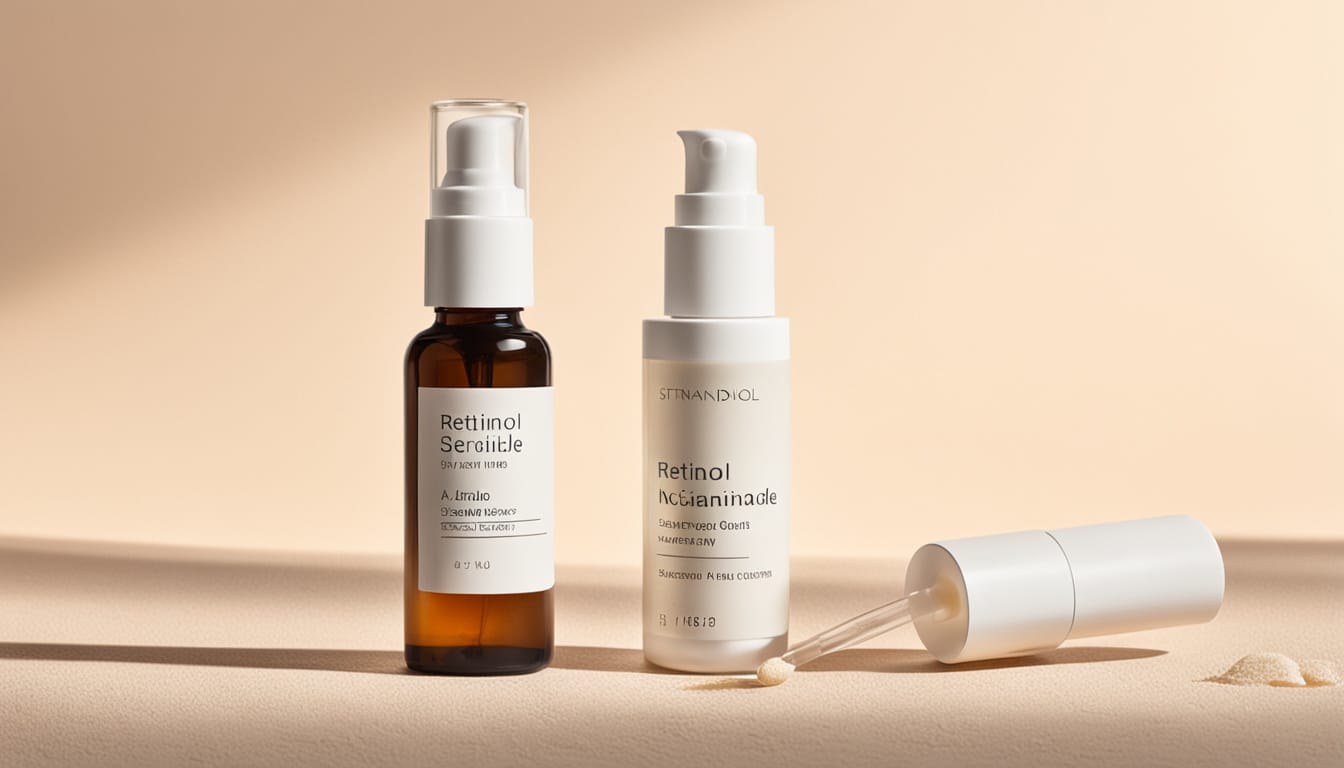
Niacinamide and retinol: which to use first and how to layer them correctly
Niacinamide and retinoids are the two most evidence-backed OTC skincare actives. They work through different mechanisms and are more effective together than either alone. Here is exactly how to sequence them, why the order matters, and how niacinamide addresses the specific challenges retinoids create.
Niacinamide and retinoids are the most frequently combined actives in evidence-based skincare routines. They are also the pairing most often surrounded by conflicting advice — apply them together, never apply them together, use one in the morning and one at night, wait 30 minutes between them. Most of this advice is either outdated or misapplied from concerns that do not reflect real use conditions.
This article explains the mechanism of each active, why they work better together than alone, the correct layering sequence, and why niacinamide is specifically useful for managing the adaptation challenges that retinoids create. Links to the full guides for each ingredient are provided for readers who want to go deeper on either one individually.
What each active does — briefly
Retinoids (retinol, retinaldehyde, tretinoin) work by converting to retinoic acid in skin tissue and binding to nuclear receptors that regulate gene expression. The outcomes: increased collagen synthesis, normalised keratinocyte turnover, reduced MMP (collagen-degrading enzyme) activity, and melanin regulation. The retinoid family has the most extensive evidence base of any OTC anti-aging ingredient category.
The challenge: retinoids increase cell turnover rate and thin the stratum corneum transiently during adaptation. This produces dryness, flaking, redness, and increased photosensitivity in the first four to eight weeks. Many people discontinue during this period before the structural benefits become established.
Niacinamide works through six distinct mechanisms simultaneously: ceramide synthesis (barrier repair), sebum regulation, melanin transfer inhibition (brightening), collagen upregulation, anti-inflammatory signalling, and DNA repair support. Full breakdown in the niacinamide complete guide.
The relevant point for this article: two of niacinamide's mechanisms directly counteract the specific adaptation challenges retinoids create. Ceramide synthesis repairs the barrier disruption retinoids cause. Anti-inflammatory signalling reduces the redness and irritation of the adaptation period. This is not coincidental — dermatologists have recommended niacinamide alongside retinoids precisely for this reason.
Why they work better together
The combination addresses multiple anti-aging pathways simultaneously through non-redundant mechanisms:
Collagen through two pathways. Retinoids upregulate procollagen gene expression and inhibit MMPs. Niacinamide independently increases collagen synthesis through fibroblast stimulation via NAD+ metabolism. The mechanisms are additive, not overlapping.
Hyperpigmentation through two pathways. Retinoids normalise keratinocyte turnover and disperse melanin granules. Niacinamide inhibits melanosome transfer from melanocytes to keratinocytes. Combined, they address pigmentation at both the production and distribution stages. This dual approach is the standard in professional depigmentation protocols.
Barrier maintained during retinoid use. Retinoids compromise the barrier transiently by accelerating cell shedding. Niacinamide increases ceramide production to maintain barrier integrity during that process. The net effect is faster retinoid adaptation with less visible irritation — meaning practitioners reach the therapeutic dose of retinoid sooner without abandoning the routine.
The layering sequence
There is one correct sequence for evening application. The concern sometimes raised — that niacinamide converts vitamin C to niacin at relevant concentrations — does not apply to the niacinamide-retinoid pairing. There is no known interaction between niacinamide and retinoids that reduces efficacy. The sequence question is purely about pH and absorption order.
Evening routine with both actives:
- Cleanse — remove SPF and any daytime products
- Apply retinoid to dry skin
- Wait 15–20 minutes for retinoid to absorb fully
- Apply niacinamide serum
- Apply moisturiser
The 15–20 minute wait between retinoid and niacinamide is not about preventing an interaction — it is about ensuring the retinoid has absorbed into skin before the next layer is applied. Applying a water-based niacinamide serum immediately over an unabsorbed retinoid dilutes the retinoid's skin contact. The wait solves this.
Alternative: niacinamide in moisturiser
Many practitioners use a niacinamide-containing moisturiser rather than a standalone niacinamide serum, which eliminates the layering sequence question entirely. Apply retinoid, wait 15–20 minutes, apply the moisturiser. The niacinamide delivers its barrier-repair and anti-inflammatory effects in the same step as hydration.
The Drunk Elephant Protini (covered in the luxury moisturiser guide) contains niacinamide alongside its peptide complex — precisely for this reason.
Morning vs evening — where each active belongs
Retinoids: evening only. Retinoids increase photosensitivity by accelerating cell turnover and transiently thinning the stratum corneum. The mechanism also involves some retinoid degradation under UV exposure. Apply retinoids in the evening without exception, and use broad-spectrum SPF every morning without exception during retinoid use.
Niacinamide: morning or evening, or both. Niacinamide is photostable — UV does not degrade it and it does not increase photosensitivity. It can be used at any point in the routine. Most practitioners use it in the morning for its brightening and barrier benefits throughout the day, and again in the evening as part of the retinoid support routine.
The full daily routine:
Morning:
- Vitamin C serum (antioxidant protection, brightening)
- Niacinamide serum (barrier support, brightening, sebum regulation)
- Moisturiser
- SPF 30–50
Evening:
- Retinoid (on dry skin)
- Wait 15–20 minutes
- Niacinamide serum or niacinamide-containing moisturiser
- Moisturiser (if serum used)
This routine runs three actives with the most evidence in anti-aging skincare — vitamin C, retinoids, and niacinamide — in a sequence that maximises each one's efficacy without interaction.
Managing the retinoid adaptation period with niacinamide
The first four to eight weeks of retinoid use is where most people quit. The barrier disruption is at its worst, the dryness and flaking are visible, and the collagen benefits have not yet appeared. Niacinamide is the most practical tool for managing this period.
Week 1–2: use retinoid every third night. Apply niacinamide morning and evening. The ceramide upregulation from niacinamide begins compensating for retinoid-induced barrier disruption within the first week of use.
Week 3–4: increase to every other night if week 1–2 produced no significant irritation. Continue niacinamide morning and evening.
Week 5–8: move to nightly retinoid use when every-other-night is well-tolerated. Niacinamide continues as a daily anchor.
If irritation persists beyond week 4: two options. First, reduce retinoid frequency back to every third night and extend the adaptation timeline. Second, add a niacinamide-containing moisturiser as the layer immediately following the retinoid rather than waiting 15–20 minutes — this buffers the retinoid contact slightly while still providing the barrier-repair benefit. The sandwich method (moisturiser, then retinoid, then moisturiser) is a last resort for very sensitive skin — it reduces irritation but also reduces retinoid efficacy proportionally.
Which products to use
For niacinamide: The Ordinary Niacinamide 10% + Zinc 1%
The most practical choice for the retinoid support role. 10% niacinamide covers the barrier-repair and anti-inflammatory mechanisms that make it useful during adaptation. $6–8 for 30ml — low cost means the barrier between starting this combination and not starting it is minimal.
The Ordinary Niacinamide 10% + Zinc 1%
$6–$8
10% niacinamide at the clinical standard. 1% zinc PCA for additional sebum regulation and anti-inflammatory support. Water-based, fragrance-free, fast-absorbing. Apply evening after retinoid absorption and morning as a standalone active.
- ✓10% concentration — covers all niacinamide mechanisms relevant to retinoid support
- ✓Zinc adds anti-inflammatory effect that complements niacinamide's barrier repair
- ✓Fast-absorbing base — practical for the post-retinoid layering step
- ✓Fragrance-free — no additional sensitisation during the retinoid adaptation period
For retinol beginners: RoC Retinol Correxion Line Smoothing Serum
The most clinically studied OTC retinol formulation at an accessible price. 0.3–0.5% retinol in a mineral delivery complex that improves tolerability. Available in capsule format which eliminates oxidation between uses. For practitioners beginning a retinoid routine and adding niacinamide as adaptation support, this is the correct starting retinol — the concentration is meaningful without being aggressive.
RoC Retinol Correxion Line Smoothing Serum
$22–$28
0.3–0.5% retinol in a mineral delivery complex. One of the most clinically studied OTC retinol formulations. Capsule format eliminates air exposure and oxidation. Fragrance-free. Starting concentration for retinoid beginners — meaningful without excessive adaptation challenge.
- ✓Well-studied specific formulation at a tolerability-appropriate concentration
- ✓Capsule format — no oxidation, no wasted product
- ✓Mineral delivery complex improves skin tolerance
- ✓Clinical evidence for this specific formula, not just generic retinol
For practitioners ready to escalate: Naturium Retinaldehyde Cream 0.05%
For adapted retinoid users who want to increase potency without moving to prescription tretinoin, retinaldehyde is the correct next step — one conversion step from retinoic acid rather than two, approximately 11 times more potent than equivalent retinol. The Naturium 0.05% formulation uses a tolerability-focused base — glycerin, triheptanoin, and tocopherol — that suits adapted skin moving up in retinoid potency. Continue using a separate niacinamide serum after the 15–20 minute retinaldehyde absorption window.
For practitioners already comfortable with retinol who want to escalate potency: apply on dry skin, wait 15–20 minutes, then layer niacinamide serum and moisturiser as normal.
Naturium Retinaldehyde Cream Serum 0.05%
$22–$28
0.05% retinaldehyde — one conversion step from retinoic acid, ~11x more potent than equivalent retinol. A well-tolerated base with glycerin, triheptanoin, and tocopherol. For adapted retinoid users escalating from retinol — continue using a separate niacinamide serum in the evening routine.
- ✓Retinaldehyde — the OTC potency step between retinol and tretinoin
- ✓Emollient base with glycerin, triheptanoin, and tocopherol — tolerability-focused for adapted skin
- ✓Pair with a separate niacinamide serum for the full barrier-support benefit
- ✓Appropriate for adapted skin: use nightly after 4–6 months of successful retinol use
The questions most people ask
Can I use niacinamide and retinol at the same time, in the same layer? Yes — there is no documented interaction that reduces the efficacy of either. The 15–20 minute wait between them is about absorption sequence, not chemical compatibility. If you use a product that contains both (like the Naturium above), there is no concern at all.
Will niacinamide reduce retinol's effectiveness? No. This concern has been raised in some skincare communities without a mechanism to support it. The two actives work through entirely different pathways and do not interfere with each other's receptor binding or metabolic conversion.
Should I start niacinamide before starting retinoids? Starting niacinamide two to four weeks before introducing a retinoid is a practical approach — it builds up ceramide levels and anti-inflammatory activity in advance of the retinoid adaptation period. Not required, but useful for anyone with known barrier sensitivity.
What if I only have time for one active in my evening routine? Use the retinoid. Its structural anti-aging evidence is stronger than niacinamide's. Niacinamide is the ideal companion to the retinoid, but the retinoid is the primary active.
The combination in one sentence
Use retinoids in the evening for structural anti-aging. Use niacinamide morning and evening — after the retinoid at night, and standalone in the morning. The combination addresses collagen synthesis, cell turnover, pigmentation, and barrier integrity simultaneously through four non-overlapping mechanisms, and the niacinamide makes the retinoid adaptation period survivable enough that most people actually complete it.